

Why There Is A Need For PCO Air Purifiers
The air in the average home holds approximately one million particles per cubic foot. In a day’s time, you breathe some 500 million particles (or two heaping tablespoons of airborne particles); which can lead to colds, flu, allergies, asthma, and respiratory disease. And when you consider that you spend 90% of your time indoors, doesn’t it make sense to ensure that you’re breathing the purest air possible?
Unfortunately, good housekeeping alone can’t solve the problem, no matter how often or thoroughly you clean. This is where PCO air purifiers, like the Airwise photocatalysis air purification system, come in. These systems are designed for continuous operation using the advanced photocatalysis process, effectively neutralizing hazardous airborne substances found even in the cleanest homes. By targeting and breaking down harmful particles, PCO air purifiers ensure you and your family breathe the purest air possible.

What Is Photocatalysis?
The photocatalysis process, used by the Airwise home air purification system, is a cutting-edge method for improving indoor air quality. By breaking down and oxidizing harmful substances, this process eliminates organic odors, microorganisms, fungi, algae, and even dangerous volatile organic compounds like formaldehyde. Unlike traditional air filters, the photocatalysis process actively neutralizes contaminants at a molecular level, ensuring a cleaner and healthier environment in your home.
Airwise Air Purifiers also include Wisepointe® technology, which is a self-limiting negative ion generator. Negative ions are attracted to positive airborne ions such as dust, pollen, pet dander, and smoke. This agglomeration of ions makes the particles heavier than air, thus settling them out of the breathing space.
Indoor Air is Polluted
According to the Environmental Protection Agency (EPA), indoor air is 2 to 5 times, and sometimes more than 100 times, more polluted than outdoor air. An indoor air pollutant is 1,000 times more likely to reach your lungs than an outdoor pollutant.
Sniffles, a scratchy throat, or watery eyes don’t necessarily mean you’re sick with a cold or the flu; the air in your home could be making you sick. In reality, about 50% of all illnesses are caused by, or aggravated by, indoor air pollution.

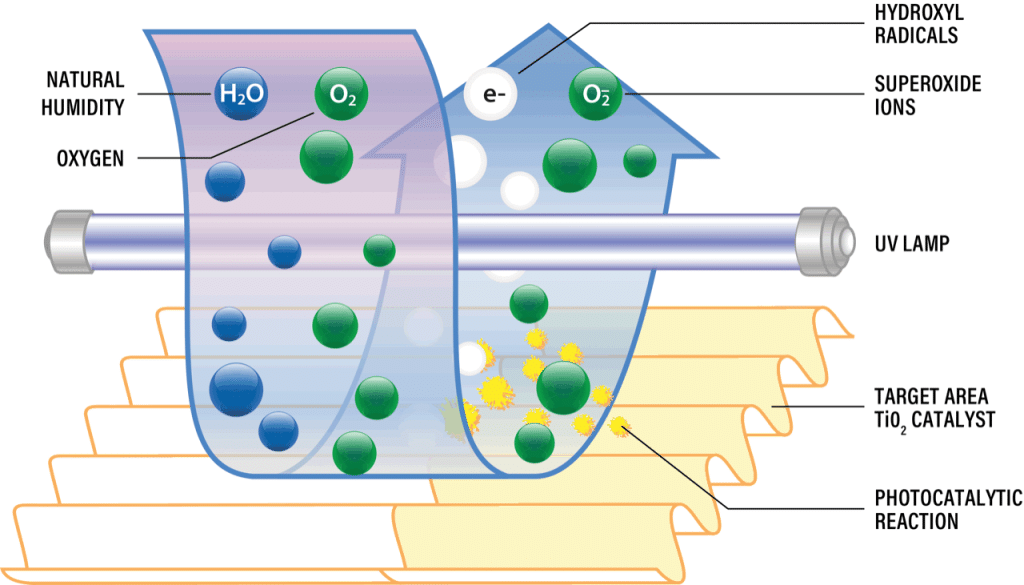

How does Airwise work?
The Airwise photocatalysis air purification system uses humidity from the air to create a photocatalytic reaction between the germicidal UV lamp and the multi-metallic and titanium dioxide coatings on the target area of the ultraviolet germicidal lamp module.(opens in new tab) This reaction produces hydroxyl radicals and superoxide ions. As the radicals and ions are emitted into the room, they destroy microorganisms like bacteria and viruses as well as oxidize odors, fungi, mold, parasites, and toxic chemical gases.
Airwise Air Purifier
Price range: $419.00 through $519.00

Airwise Replacement Air Filter Lamp Module
Price range: $119.00 through $219.00
